You are here:Home » News and Events » Product News » The Complete Guide to Nylon Tubing Selection: PA6 vs PA12 - Let REAYON PNEUMATIC Solve Your Choice Confusion!
The Complete Guide to Nylon Tubing Selection: PA6 vs PA12 - Let REAYON PNEUMATIC Solve Your Choice Confusion!
Views: 59 Author: Site Editor Publish Time: 2025-11-18 Origin: Site
In the field of industrial fluid transmission, nylon tubing, with its excellent overall performance, has become an indispensable "blood vessel" in pneumatic systems, automation equipment, and even automotive manufacturing. However, when faced with the common choice between PA6 and PA12 materials, many engineers and purchasers find themselves in a dilemma. As your reliable fluid technology partner, REAYON PNEUMATIC understands your challenges and is committed to providing you with professional selection guidance and high-quality product solutions.
This article provides a comprehensive analysis of nylon tubing and delves into the core differences between PA6 and PA12 to help you make the smartest choice.
1. Why Choose Nylon Tubing? REAYON PNEUMATIC Explains Its Appeal
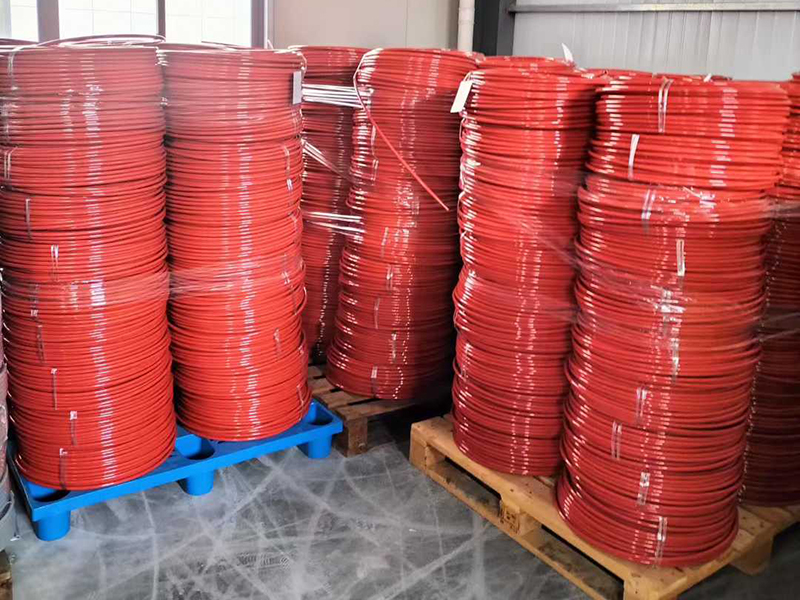
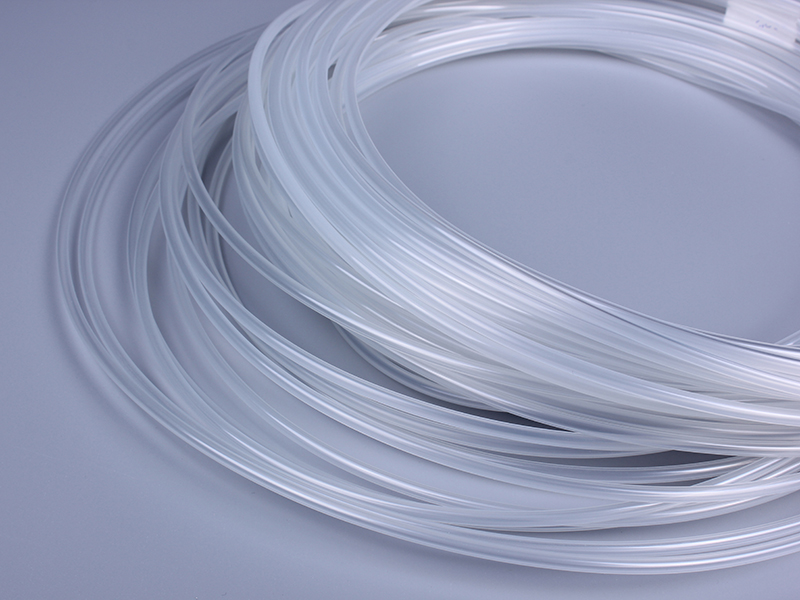
Nylon tubing (polyamide tubing) is far from an ordinary plastic tube. It combines numerous advantages, making it an ideal choice for many demanding working conditions. The nylon tubing series provided by REAYON PNEUMATIC takes these base properties and optimizes them for peak performance:
High Strength & Wear Resistance: Excellent mechanical properties, capable of withstanding certain pressure and impact, leading to a long service life.
Chemical Corrosion Resistance: Good resistance to common chemicals like oils, fuels, and coolants.
Lightweight & Easy Installation: Lightweight and flexible, significantly reducing installation complexity and labor intensity.
Wide Temperature Range: Can generally operate stably in environments from -40°C to +80°C (even up to 120°C).
2. PA6 vs PA12: REAYON PNEUMATIC's In-Depth Analysis of Core Differences
Although PA6 and PA12 are brothers in the polyamide family, their performance characteristics differ significantly. The key to selection lies in understanding the properties derived from their molecular structures. The technical team at REAYON PNEUMATIC is here to reveal the secrets behind them.
The Core Differentiator: Water Absorption This is the most fundamental difference between PA6 and PA12. PA6's water absorption (approx. 2.8%-3.0%) is much higher than PA12's (approx. 0.7%-0.9%). Water absorption causes dimensional changes and a decrease in mechanical strength. Therefore, this metric directly determines their stability in different environments.
REAYON PNEUMATIC Comparison Table for a Clear Overview:
Characteristic
PA6 (Nylon 6)
PA12 (Nylon 12)
Impact on Selection
Water Absorption
High
Very Low
PA12 offers more stable dimensions and performance in humid environments.
Low-Temperature Toughness
Average, can become brittle
Excellent, remains flexible
PA12 is the unequivocal choice for cold environments.
Flexibility
Relatively stiff, more rigid
Softer, more pliable
PA12 is better for complex routing and dynamic bending.
Chemical Resistance
Good
Superior
PA12 has broader and better resistance to special chemicals.
Mechanical Strength
High (when dry)
Good (and stable)
PA6 has high strength when dry, but it decreases significantly after water absorption.
Cost
Economical
Relatively Higher
PA6 is a viable option when budget is tight.
REAYON PNEUMATIC's Conceptual Understanding:
PA6 is like a "Dry Environment Hardened Warrior": In dry conditions, it's strong, rigid, and cost-effective. But it "fears water," and its performance can degrade in humid environments.
PA12 is like an "All-Round Performer": It might not be the champion in every single category, but it wins with balance. Regardless of dry/humid conditions or temperature variations, it maintains stable and excellent performance, offering strong environmental adaptability.
3. How to Choose Correctly? REAYON PNEUMATIC's Professional Decision Flowchart
Stop纠结ing over specific applications! Answer the questions below, and let REAYON PNEUMATIChelp you pinpoint your needs:
Is the working environment humid or in contact with water?
Yes → Prefer PA12. Its low water absorption ensures long-term sealing performance and strength stability.
No → PA6 can be an alternative.
Does the operating temperature involve low temperatures (e.g., < -20°C)?
Yes → Strongly recommend PA12. Its exceptional low-temperature toughness prevents tubing from cracking, ensuring safety.
No → PA6 can suffice.
Does the tubing require frequent movement, bending, or vibration?
Yes → Choose PA12. Its flexibility is more suitable for dynamic applications like cable carriers and robotics.
No → For fixed installations, the rigidity of PA6 might be suitable.
Is the budget very tight, and were the answers to the above questions all "No"?
Yes → PA6 can be considered as an economical solution.
No → For long-term reliability and reduced maintenance headaches, investing in PA12 is usually the wiser choice.
Q1: Can REAYON PNEUMATIC's nylon tubing be used for fuel line applications? A: Yes, but special attention is needed. REAYON PNEUMATIC's PA12 series, due to its superior chemical resistance, particularly to fuels, is typically the preferred material for fuel lines. We offer specific models designed for this purpose; please consult our technical staff for precise selection advice.
Q2: What is the maximum temperature tolerance of REAYON PNEUMATIC's nylon tubing? A: This depends on the material and manufacturing process. Our standard nylon tubing (e.g., PA12) generally has a continuous use temperature of 80°C-100°C. However, REAYON PNEUMATIC'shigh-temperature models (e.g., PA12 HT) can withstand 120°C or higher for short periods. Please refer to our product specifications for accurate data.
Q3: How do I connect REAYON PNEUMATIC's nylon tubing? What should I note during installation? A: The most common method is using push-to-connect fittings, which are easy to install. REAYON PNEUMATIC offers a full range of fittings perfectly matched to our tubing. During installation, ensure:
Use a professional tube cutter to ensure a square, deburred cut.
The tube is inserted to the full depth, usually until a 'click' is felt.
There is sufficient bend radius; avoid sharp bends.
Q4: What's the difference between PA11 and PA12 at REAYON PNEUMATIC? A: PA11's performance is very close to PA12, also featuring low water absorption and good flexibility. However, its raw material is derived from castor oil, making it more environmentally friendly, but it's also typically more expensive. In many applications, REAYON PNEUMATIC's PA12 is a cost-effective alternative to PA11. Our experts can help you analyze if PA11 is truly necessary for your application.
Q5: Why are some of REAYON PNEUMATIC's nylon tubes white and others black? A: Black nylon tubing usually contains carbon black as an additive, giving it UV resistance and making it more suitable for outdoor use, delaying aging. White or natural tubes are mostly used indoors. REAYON PNEUMATIC offers a variety of color options to meet the needs of different application environments.
Conclusion
There is no single "best" material, only the most suitable choice. PA6 is the economical choice for dry, static, room temperature, and budget-limited scenarios; whereas PA12 is the reliable guarantee for harsh conditions involving humidity, low temperatures, dynamic bending, and chemical corrosion.
As your trusted partner, REAYON PNEUMATIC not only provides a full range of high-quality nylon tubing and fitting products covering PA6, PA12, and more, but also leverages our deep technical expertise to offer one-on-one professional selection support and tailored solutions for your specific projects.
Contact the REAYON PNEUMATIC technical team today! Let us help you accurately match your needs and enhance your system's reliability.